

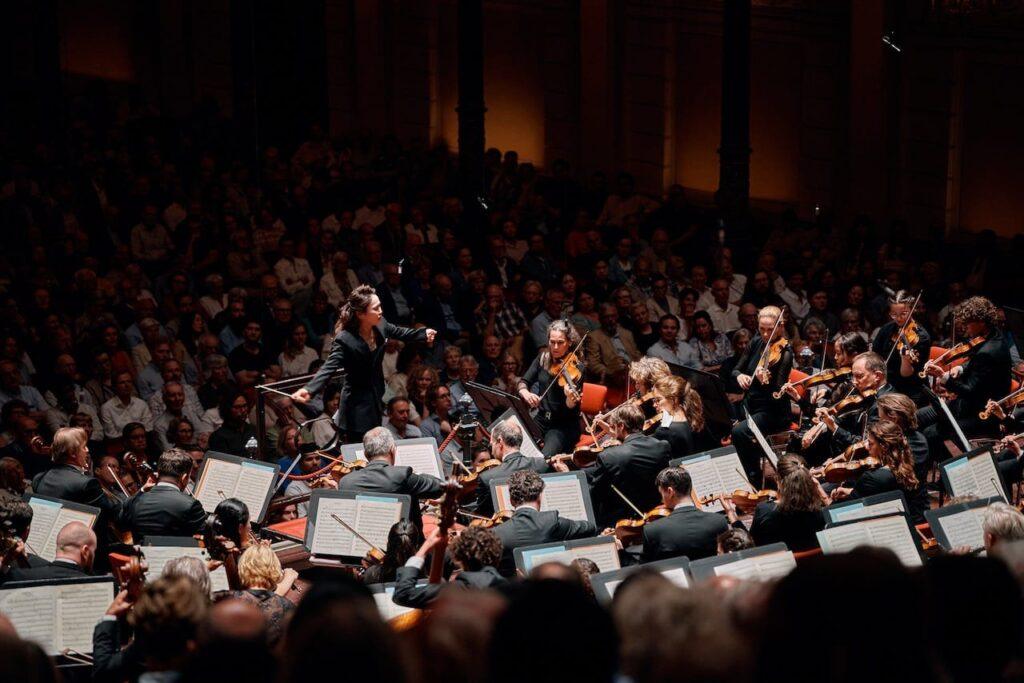
The Royal Concertgebouw Orchestra’s concert last Thursday was definitely one for the ladies. Conductor Han-Na Chang, making her long-awaited debut, was joined by section principals, cellist Tatjana Vassiljeva-Monnier and violist Santa Vižine for Richard Strauss’ enigmatic Don Quixote. This, the latest event putting RCO principal musicians in the limelight.
Chang’s fans had travelled from all over the world to see ‘their girl’ in concert, such is the demand for tickets in her native South Korea. Camped at the top of the famous Concertgebouw stairs, a polite and respectful row of (mostly) ladies waited patiently to meet a young lady, making waves not only in her native homeland, but also in the constantly changing world of conducting.
Coupled with performances of Boris Godunov at Dutch National Opera, this is a busy time for all.
The programme

The Swedish connection
But there was another new face on the stage whose presence should not go unnoticed. Guest leader, Malin Broman, currently concertmaster of Swedish Radio Symphony Orchestra and recently appointed musical director of the Nordic Chamber Orchestra, was a seamless and classy addition. With the vacant post of second concertmaster still to be filled after the departure of Liviu Prunaru last season, will Broman be the one? Only time will tell.
The new commission
The evening started with a colourful new co-commission, Bernd Richard Deutsch’s Phantasma based on Gustav Klimt’s Beethoven frieze in Vienna. More a percussive blancmange of immense sound canvases moving in parallel punctuated by occasional jazzy rhythms. Unexpected timbres dominated as opaque clarinet scales vied with fluttering high horns, muted trumpet with excessively wide vibrato and snarling brass. All ending where we began with a syncopated clave rhythm.
The symphony
Beethoven’s Fourth Symphony (last performed with Paavo Järvi, on tour in Japan, 2019) changed the mood completely, cleansing the palette after Phantasma’s dystopian realism. Conducting from memory, Chang gently caressed the long overarching phrases, always with an eye to the future. This was Chang at her best. With an extensive conducting vocabulary to hand, she crafted impressive climaxes producing a full-bodied sound distinct from the numerous authentic performances of late. Perhaps an Argentinian merlot instead of a French pinot noir.

Two stars caught the eye. First, guest principal clarinet, the Berliner Philharmoniker’s Andraž Golob whose delicate, almost ethereal playing drew us close. The second, a recently acquired pair of Vienna timpani (the smallest of which is hand-tuned) producing a distinctive and mesmerising quality, allowing for more immediate articulation of the phrase. (There is more to this story… so scroll down!) Immaculate ensemble for the tricky Finale opening, and a scorching bassoon drew a smile, yet amongst all the melee, Chang still found time for stillness.
The storytelling
Wearing a bright red trouser suit, Vassiljeva-Monnier joined the stage for Strauss’ demanding tone poem based on Cervantes’ literary tale Don Quixote. Subtitled ‘Fantastical variations on a theme of knightly character’, the challenge for conductor and cellist alike is to find a compelling narrative amidst Strauss’ dense and complex score.
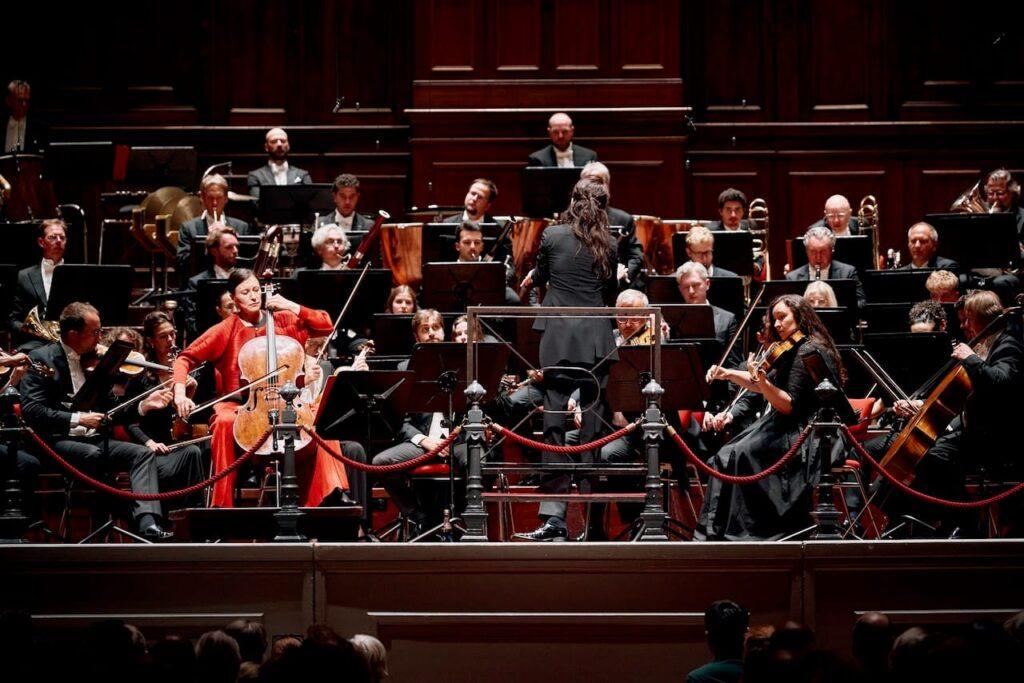
Conducting again from memory, Chang immediately found the playfulness creating a performance full of colourful storytelling. Strange flutter tonguing and muted trumpet distortions, comic tuba notes, timpani glissandi, wind machines and quirky fourth horn solos magnified the farce of our intrepid hero’s fantasies.
The warmth of Vižine’s Sancho Panza (Don Quixote’s side-kick) enchanted, perfectly complemented by a clarinet and horn chorale. Vassiljeva-Monnier shone brightly in the quieter more melancholic moments, teasing the melody. Her harmonics cleverly resonating with a flute chord before giving way to those fateful steps of doom. Emotional closing reflections – depicting Don Quixote coming to his senses – were both tender and restrained, before quite deliberately bumping down the stairs. Explicit storytelling at its heart.
The story behind the timpani
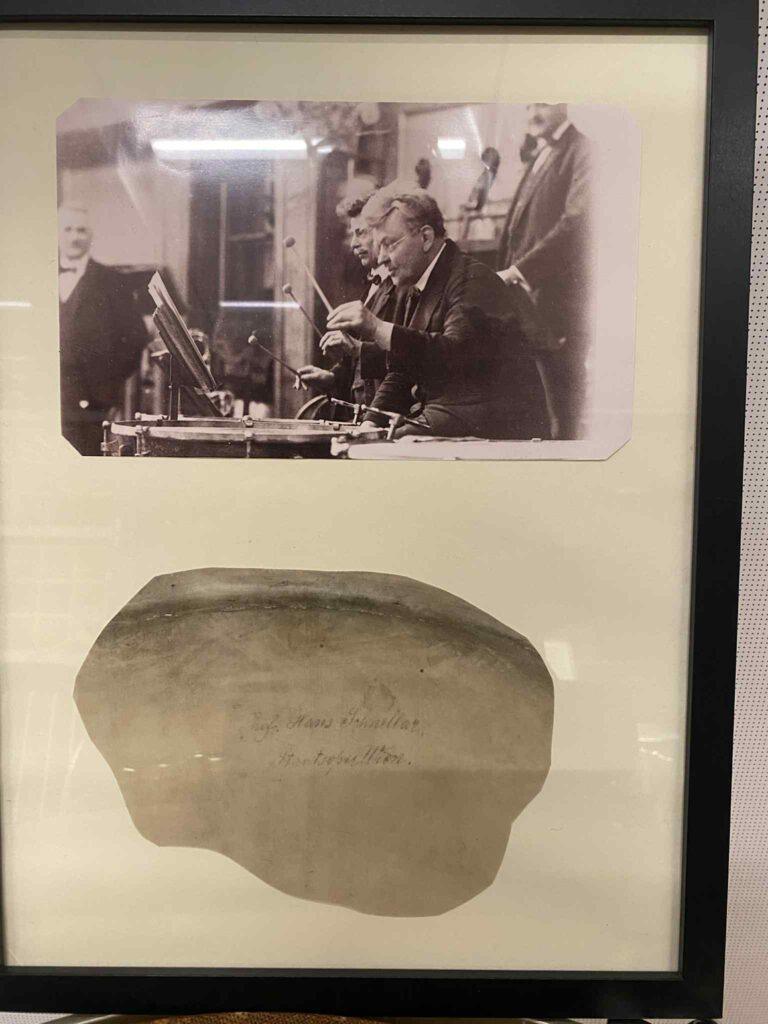
Concertgebouw Orchestra percussionists Herman Rieken and Bart Jansen recently heard about two small timpani for sale in Cologne. After visiting the owner (an eighty-three-year gentleman known more for his vast collection of brass instruments) last year, and making various checks, they discovered that the timpani skins (made from goat pelt which produces a wealth of natural overtones) bore the original handwritten signature of Professor Hans Schnellar, Hofoper Wiener (Vienna Court Opera). The same Hans Schnellar who was RCO timpanist for just one season (1893-1894) before heading to Vienna as percussionist with the Vienna Philharmoniker and the Staatsoper where he started making timpani, now known as Wiener Pauken and used by orchestras all over the world.
Assisted by the Friend’s society, this very special pair of one-hundred-year-old salon timpani soon found a new home in Amsterdam. Debuting this week, complete with new skins (as the originals were slightly torn at the edges), the pair are joined by Jansen’s own larger low F Schnellar Reform-Hebel timpano. The percussion section could not be more historically informed if it tried.

For more detailed information, read former RCO timpanist Nick Woud’s excellent article.
Further listening


Read more from Clare


This concert was reviewed in the Concertgebouw on Thursday 19th June ,2025
Follow Clare Varney on Facebook or Instagram to read more about Music and Culture

