

These are turbulent times, and the world has changed so much in the past three weeks. Last night’s concert in the Musikcentrum, Enschede, given by the Phion Orkest van Gelderland & Overijssel sought to play its part in showing solidarity for those suffering in Ukraine. A performance of the Melody by Myroslav Skoryk followed, breaking the minute’s silence. The audience sat mesmerised. Young British conductor Alpesh Chauhan, who had spent the previous week working with the London Philarmonic Orchestra and the Philharmonia, had the orchestra in the palm of his hand. Such sensitivity, dynamic range, and phrasing in such a short piece made me fall in love with a work previously unknown to me.
But all through this opening music, I wondered: who was this lady, sitting in the violins and not wearing all black? Then all was revealed, as the soloist, Alena Baeva, returned to the stage. The soloist had joined the orchestra in this tribute.
The concerto
Baeva’s Tchaikovsky Violin Concerto was not the usual bravura performance full of technical mastery. Tonight’s performance was intimate and personal: a love song to a people ravaged by decades of conflict and turbulence. At times, there was such beauty in her playing that all I could do was gaze in wonder, my pencil redundant and still.
Russian violinist Alena Baeva has performed and recorded all over the world with some of the finest musicians in the world including Charles Dutoit, Marta Argerich, Steven Isserlis and Yuri Bashmet to name a few. Playing on a “ex-William Kroll” Guarneri del Gesù (1738) kindly loaned from J & A Beares of London, she conjured a world full of lyricism coupled with fabulously clean and dazzling passagework.

The cadenza
There is a certain lightness to Baeva’s playing which draws you in. Perhaps influenced by her work on period instruments. This was evident in the cadenza, a brief moment of emotional depth in her magical world; broken only by the return to reality and a full orchestral tutti under the confident, assured, and at times playful direction of Chauhan.
The first movement was over before we knew it, the tempo was so sprightly. It was so good, you could sense the whole audience just wanted to clap in appreciation, but they followed convention, and instead waited for more.
After the deeply lyrical slow movement, the exciting start of the third movement set off at a fearsome tempo. The orchestra matched Baeva’s clear articulation. In the words of Hanslick, a reviewer at the 1881 premiere in Vienna given by violinist Adolf Brodsky, it seemed as if ‘the violin is no longer played but shaken’. The violin, at times became almost percussive as intensely lyrical sotto voce playing contrasted with fun and excitement. All involved were clearly enjoying themselves. This is a performance I will remember for a long time to come. I would encourage all to seek her out, and witness for yourself this most beautiful of players.
The symphony
Chauhan is a natural and relaxed conductor with an expressive and efficient conducting technique. Phion clearly relished playing Brahms’ Second Symphony for this most demanding of maestros. His commitment to the music, even jumping up and down on the podium at times, was more than convincing.
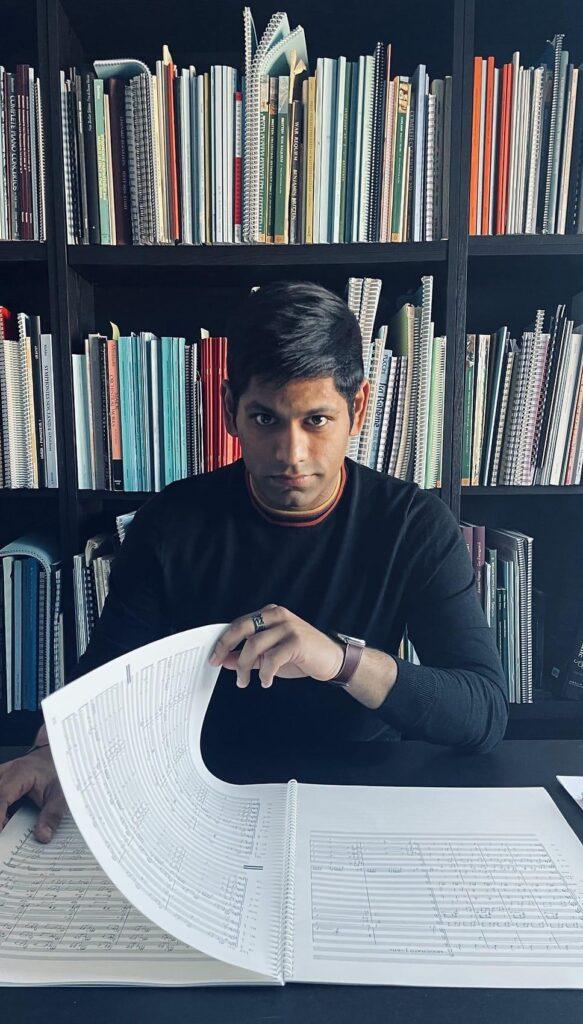
Carefully measured climaxes contrasted with moments of tranquillity, and I really loved the fabulously dark trombone and tuba sound in the syncopated chordal passages. Special mention should go to the violins who more than rose to the occasion, meeting Alpesh’s every demand.
Chauhan understand the music and the composer’s intentions with such clarity that it was a joy to behold, and I left the concert hall with a new understanding of this work.
This was a concert full of contrast. Chauhan is a man of contrasts and I will follow his career with interest.
Further listening:
This concert was reviewed in the Muziekcentrum, Enschede on 18th March, 2022
Read more from Clare


Follow Clare Varney on Facebook or Instagram to read more about Music and Culture

