

Klaus Mäkelä sat down for a post-concert chat with Dutch presenter, Christiaan Kuyvenhoven in Amsterdam’s Concertgebouw following a rather magnificent Mahler 5 with the Royal Concertgebouw Orchestra.
They talked about rehearsal technique, the power of a double espresso, finding inspiration in Caravaggio’s artwork in Milan, and how to create that very special Concertgebouw sound in concert halls all over the world. An apt topic of discussion as they head off on their latest European tour taking in Salzburg, Berlin, Cologne, Lucerne and Vienna, plus their first appearance at the BBC Proms since 2017; their first with Mäkelä on the podium.
Christiaan Kuyvenhoven (CK): What a night. A big concert, big repertoire, big emotions. You filled our hearts with love. Wonderfully done! What’s running through your mind after such a night?
Klaus Mäkelä (KM): It’s always very special to conduct Mahler with the Concertgebouw Orchestra (RCO). And I’m not saying that because it’s something one should say, but it truly feels very special. They’re a very sensitive orchestra. I often think of them as my instrument. But they are much more… I think about the great violins of Stradivari or Guarneri. It takes time to learn how to play the instrument. And each day we play, we find something new.
Tonight was another lovely start of the season. Although we’ve already worked a lot together, in rehearsals, we felt there was something new, and things were easier than before.
Mahler 5, of course, is a great piece. The orchestra knows it very well. I know it very well. We’ve both done it many times – the orchestra, though a bit more… [130 times in total…]. Also with Mahler! But there are not so many members left from that time!
It’s a very special piece, because it’s a very schizophrenic work. You start from this incredible, tragic manifest and then you end with this classical light.
These two programs, tonight and last Thursday’s Bartók Concerto for Orchestra and Prokofiev with Janine Jansen, are all connected with this idea of classical ideas. And Berio’s Rendering is a great example of that.
Mahler’s Fifth Symphony has more counterpoint and classical motives which are repeated and inverted, I think, than any other piece. That’s why these two programs are actually connected: in a sense we look backwards and forwards.
CK: You do all this huge repertoire in one week, and then next week, you do something else. You have it all in your mind, in your heart and your whole being. You speak about the orchestra as an instrument, but I would like to speak about you as the player of that instrument, the conductor. You’re a big star. You’re an international superstar.
You make the difference when you stand in front of an orchestra.
How do you prepare?
KM: It’s quite logical. When it comes to preparation, I’m a good believer in context and everything has a context. Each note, each movement, each program. And the more one understands the story behind a work, the better.
I often think about zooming in and zooming out. Some days when I study the score, I look at a few bars here and there, just zooming in while on others, I look at the line. Sometimes I may read about Mahler’s life, or read some of his letters.
Sometimes, something completely different may provoke an impulse.
I love visual arts – I love paintings, and I was just in Milan and saw maybe one of the greatest Caravaggio’s I’ve ever seen. And somehow on that day, I understood Bartók’s Concerto for Orchestra, or I thought I understood. Of course I didn’t, but I need impulses. I’m always searching for them.
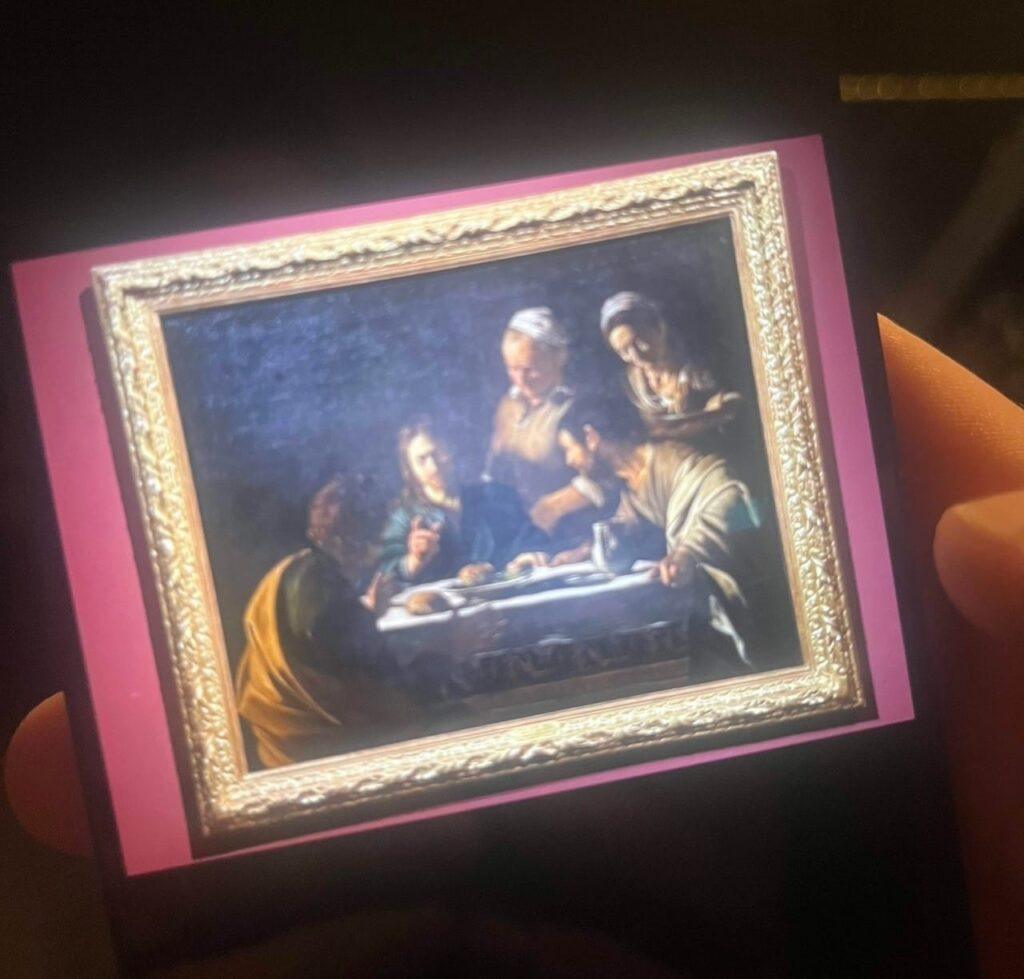
CK: So there’s a strong element of spontaneity in what you do. When we watch you on stage, you have a wonderful technique. Tonight, I noticed that you switch between controlling the orchestra and giving them space, trusting them.
How does that work ‘being in the moment’? How sensitive do you have to be?
KM: Thank you for the nice words. My teacher always said: “a great conductor helps but not disturbs,” and that makes sense in many ways.
When we stand there as a conductor, we’re never in the moment. We’re always looking to the future, or we try! But I always think, what is the line? Because every shape is part of a bigger line, otherwise everything is very vertical. I try to look ahead and think: where are we going? What might happen?
So for example, in Mahler 5, with so many people on stage, and especially here at the Concertgebouw where there’s a very special acoustic, it’s sometimes challenging to hear everything. So you have to guess. That’s something we have to be able to do. But we prepare and rehearse quite a bit. We started on Friday morning. First we played the piece in its entirety at 9:30am… actually 10am! It didn’t sound like it sounded now, but it was very nice.
My work is to frame the painting. To find the connections, the lines, the expression and the sound. This orchestra is all about sound.

CK: I had the great privilege of attending last Monday’s rehearsal, and I noticed that you work at an extremely high tempo. How do you communicate? Do you use gestures: your eyes, body language… speech?
KM: I have a double espresso!
It’s sometimes challenging because we have a limited amount of time. In this symphony, in a way, almost every note could be different or improved. You have to decide what are the three main points? Because if you correct one thing, that doesn’t necessarily help other things. But I try to alternate the rhythm and sometimes we keep playing. Imagine having to stop all the time. “What does he want… again?!!”
But I try to speak less because in general, speaking is a waste of time!
CK: You live and work at a high tempo. You have the Mahler 7 score with you now, as if you’d rather be studying it tonight.
How do you keep yourself in shape, physically and emotionally?
KM: That’s a good question. I feel at home here in Amsterdam. Of course, you carry the responsibility, but it fills me with purpose. I enjoy looking at paintings and now for example as I’m studying Mahler 7, so like Mahler, I visit Rembrandt’s Night Watch [across the road in the Rijskmuseum].
CK: It’s rather close by… You’ll be able to visit many times when you become the eighth Chief Conductor of the RCO, and also in Chicago. Big responsibilities in two continents. Are you looking forward to this?
KM: Yes, very much. I think it’s a wonderful thing for me, but I hope the orchestras also benefit.
They’re both completely different, there’s no point in comparing. Very different societies, very different acoustics, very different history, but with the same love for music.
CK: Will it give you a bit more rest in your schedule as well?
KM: Yes, and it will also give me the opportunity to do different kinds of things.

CK: You’re going on tour now with this program in different halls, including London’s Royal Albert Hall.
How do you adjust your interpretation to each hall?
KM: That’s a very good question – we try our best! And this orchestra is very sensitive when it comes to different acoustics. Something I love, is that when I was speaking earlier about the orchestra being my instrument, this hall is the musicians’ instrument. And I find that so beautiful. This orchestra has always played in the Concertgebouw (concert building) because it’s the building’s orchestra. And I feel that lots of their sound comes not only from the sound created by the hall, but from how you have to play, in order for it to make sense.
Of course we attract some of the best musicians in the world, but we don’t always take the best person. We take the most suitable. In this sense, I feel the orchestra consists of people who share this fascination for the sound. Musicians who want to play in a sound that shimmers.
When we tour, it actually works because when you spend all your time trying to search for that sound, it stays with you.
I have a very short story, if I may…
I played with the great cellist Truls Mørk who I’ve known for a long time. He’s played on this incredible old Italian cello, [a 1723 Dominico Montagnana] for about 25 years.
One day, he came to rehearsal with a shiny orange cello, looking like it was made yesterday, or five minutes before!
And I said: “What the hell is this?”
And he said: “No, I have a different cello. I’m trying this one.”
And I thought, what about his sound? Because he had an incredible cello – it was his voice!
But he started playing, and it sounded exactly like the Montagnana. Why? Because he’s searched for his sound for so many years. And if you can imagine your sound, then you can create it.
I feel that’s what we do here with the Concertgebouw Orchestra. We’ve always played this instrument, the Concertgebouw. So when we go on tour to the Royal Albert Hall (which is very different), Vienna’s Konzerthaus or the Berlin Philharmonie, we bring part of this hall with us. And we don’t have to pay the rent!
CK: Well, you have an exceptional talent for imagining and creating the sound. I wish you lots of fun, health. “Toi, toi, toi!” for the tour. Thank you.

Read more from Clare


Clare attended the performance and post-concert chat in the Concertgebouw on Tuesday 19th August, 2025
Follow Clare Varney on Facebook or Instagram to read more about Music and Culture

